This website use cookies to ensure you get the best experience on our website
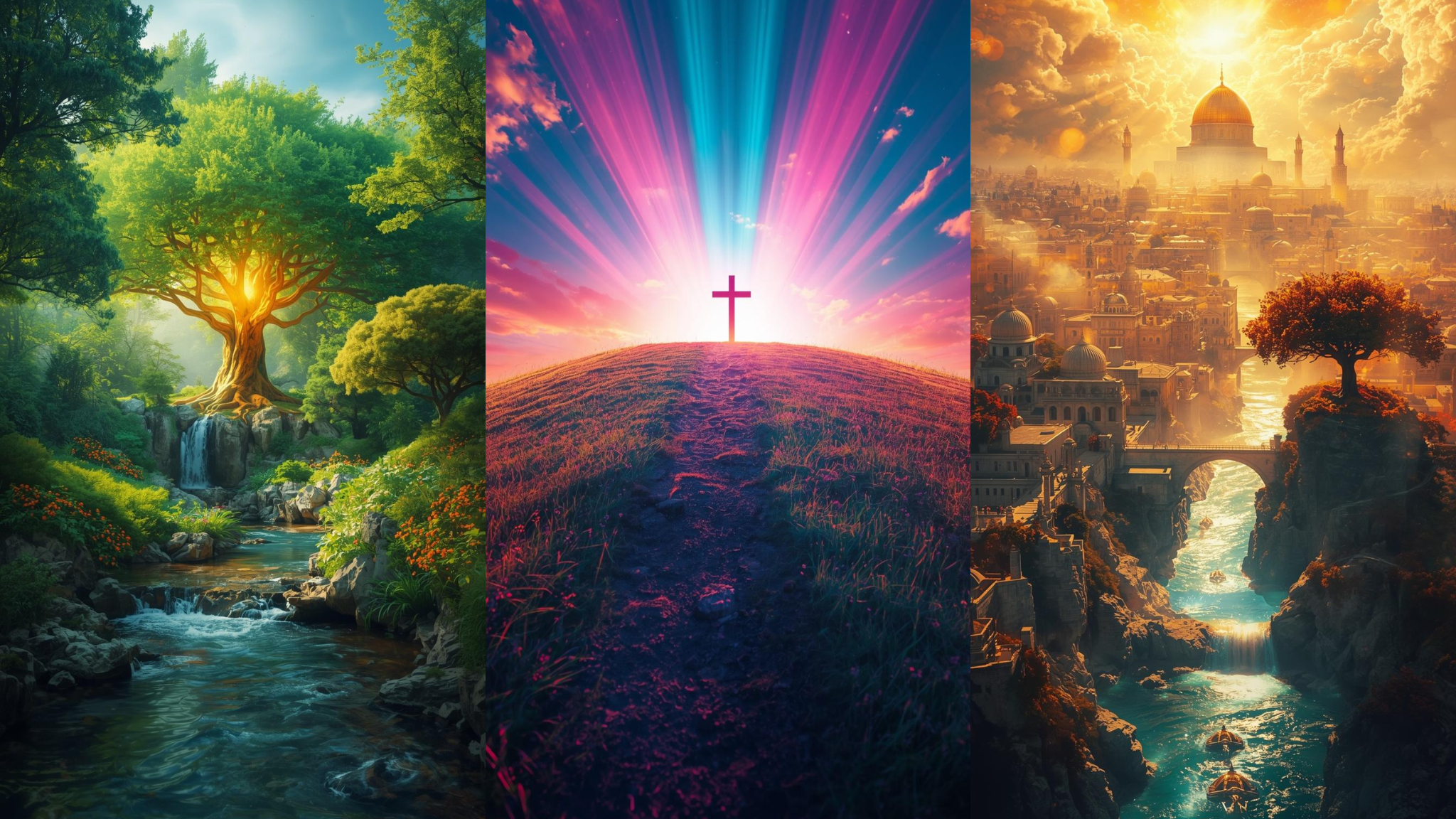
From Eden to the New Creation — God’s Plan to Dwell With Humanity
Introduction
When people read the Bible, they often see many separate stories. But the Bible actually tells one continuous story: God’s plan to dwell with humanity. From the Garden of Eden to the New Creation described in Revelation, Scripture reveals the same desire from God:
“Behold, the dwelling place of God is with man.” — Revelation 21:3
The Garden of Eden was not simply a beautiful garden. It was the place where heaven and earth met—where God walked with humanity. Understanding this changes how we see the rest of Scripture.
1. Eden — The First Dwelling Place of God
Genesis describes Eden as the place where God walked with Adam and Eve.
“They heard the sound of the LORD God walking in the garden in the cool of the day.” — Genesis 3:8
This shows that Eden was more than farmland or nature. It was God’s sacred space on earth. Several details point to this:
• A river flowed out of Eden and divided into four rivers (Genesis 2:10–14)
• Precious stones and gold were present (Genesis 2:11–12)
• The Tree of Life stood in the center
These same elements later appear in the Tabernacle, Temple, and New Jerusalem. Eden functioned like the first sanctuary.
2. Adam’s Role — Humanity as God’s Representatives
Adam was given two responsibilities:
“The LORD God took the man and put him in the garden of Eden to work it and keep it.”— Genesis 2:15
The Hebrew words used here are the same words later used for priests serving in the Tabernacle. This suggests Adam’s role was similar to a priest serving in God’s presence. Adam represented humanity before God, caring for the place where God’s presence dwelled. Humanity was created to live in relationship and fellowship with God.
3. The Fall — Separation from God’s Presence
When Adam and Eve sinned, the relationship was broken. Humanity was removed from the Garden.
“He drove out the man, and at the east of the garden of Eden he placed the cherubim… to guard the way to the Tree of Life.”— Genesis 3:24
Cherubim guarding sacred space appear again later in Scripture:
• On the Ark of the Covenant
• Woven into the Temple curtain
These symbols remind us that humanity lost access to God’s presence.
4. The Tabernacle — A Picture of Eden Restored
When God delivered Israel from Egypt, He instructed Moses to build the Tabernacle.
“Let them make me a sanctuary, that I may dwell among them.”— Exodus 25:8
The design of the Tabernacle contains many Eden images:
• Cherubim on the veil
• Lampstand shaped like a tree
• Gold and precious materials
• God’s presence dwelling inside
The Tabernacle was a temporary way for God to dwell among His people again.
5.Solomon’s Temple expanded the same imagery
Scripture describes:
• Palm trees carved into the walls
• Flowers and fruit designs
• Cherubim figures
• Gold covering the interior
These designs intentionally reflected Garden imagery. The Temple symbolized a restored meeting place between heaven and earth.
6. Jesus — God Dwelling With Us
The greatest restoration came through Jesus.
“The Word became flesh and dwelt among us.”— John 1:14
The word dwelt literally means “tabernacled.” Jesus became the true temple where God’s presence lives among humanity. Through His sacrifice, the barrier separating people from God was removed.
“The curtain of the temple was torn in two.”— Matthew 27:51
Access to God was opened again.
7. The New Creation — Eden Fully Restored
The final chapters of Revelation show the full restoration.
“The dwelling place of God is with man.”— Revelation 21:3
And in the New Creation:
• The Tree of Life returns
• A river of life flows from God’s throne
• There is no temple, because God Himself is present
“They will see His face.”— Revelation 22:4
What was lost in Eden will be fully restored forever.
8. The story of the Bible is not just about history.
It is about restoration.
Through Jesus:
• We are reconciled to God
• We become temples of the Holy Spirit
• We are preparing for the day when God fully dwells with His people
The call of Scripture is clear:
Repent. Believe. Walk with God again.
The same God who walked with humanity in Eden is calling people back into relationship with Him.